Building a Rowing Computer
An engineering friend recently said to me “we’re in the age of the personal project” - he was referring to AI and how it allows someone with some engineering skill to use AI to architect and execute on complex projects… the kind of things we used to dream of being able to do. The reality used to be you’d come up with an idea “wouldn’t it be cool to have x” and then spend weeks researching hardware options, protocols, etc. and then more weeks coding, debugging, soldering, etc. - not necessarily in that order 😅
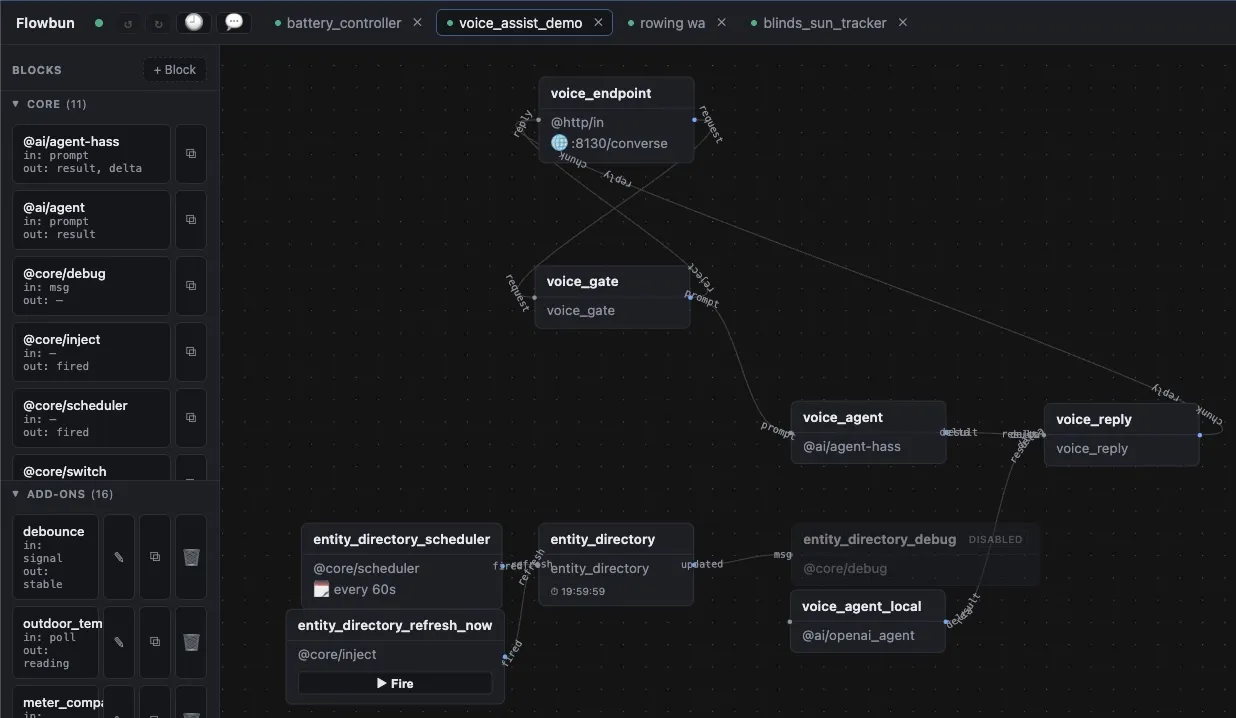
After experimenting with AI as a way of improving home automation I set my sights on something a little more ambitious.
I’m a keen cyclist and in the cycling world you have multiple manufacturers desperately dancing around you to get you to buy their bicycle computer, wear their heart rate monitor, don their sweat sensor, breath into their mask, etc.
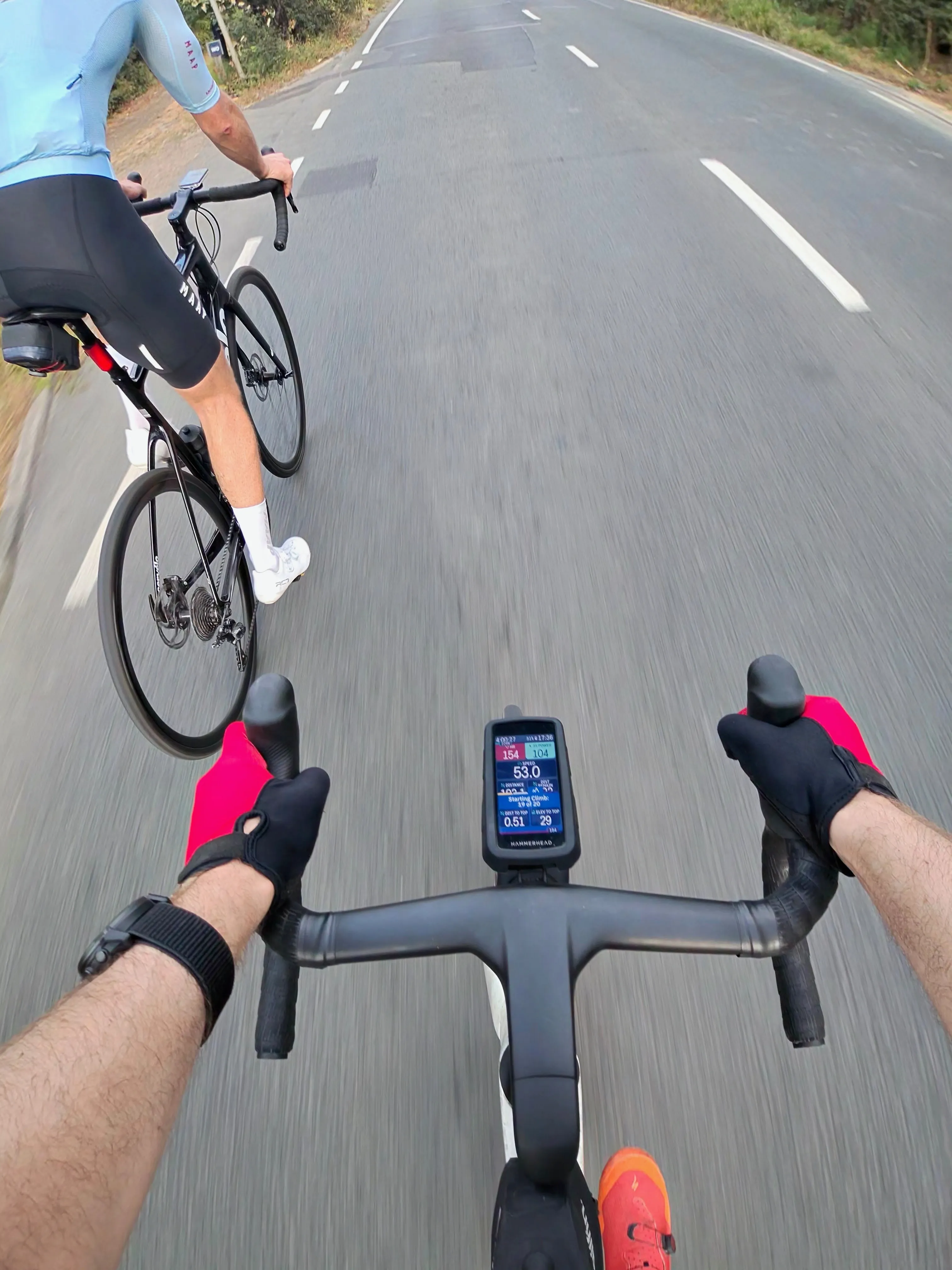
As a cyclist you’re spoilt for choice, tech is everywhere. And indeed, as a geek I like to play, so I try a lot of gadgets. Many are crap, some are good. I have written about a few of these gadgets on my blog before.
I also row and in the rowing world tech almost doesn’t exist, the contrast is stark. Amongst sport cyclists almost everyone has a bike computer, many have what could be called a mid-range to upper end bike computer (eg. £ 300 or more). Most sport cyclists use Strava… I’d hazard 95% of sport cyclists in my cycling club do so.
Rowing, however, maybe 15% of rowers in a younger, more progressive rowing club use Strava and even less in an older more traditional club. Most rowers don’t log their rows with a fitness tracker or rowing computer.
It is possible to track rowing with a general purpose fitness tracker, like a Garmin or Apple watch - but as a rower you don’t want anything on your wrists, which means it ideally needs to be mounted to the boat (aka “scull”). A lot of people don’t realise it but if you want to track “stroke rate” your device really should be attached firmly to the boat and the algorithm for detecting strokes is non-trivial in complexity. Most fitness trackers, even if they have a rowing sports profile, do a poor job of this.
There are essentially two real rowing computer competitors on the market currently, namely the NK Speedcoach and the ActiveTools ActiveSpeed. A real contender that isn’t a “rowing computer” is CrewNerd. CrewNerd is an Android and iOS app (different codebases the author claims), which runs on any modern phone - coupled with a sturdy mount (I use a RAM mount) this is a compelling solution. CrewNerd works really well, I’m a fan. CN is cheap (you use your existing/old phone), low friction to analysis and social platforms and reasonably performant.
The biggest issues with CrewNerd are almost no phone or tablet I’ve seen to date is built for regular on-water use. The closest I’ve found is a big marine tablet and it’s really expensive.
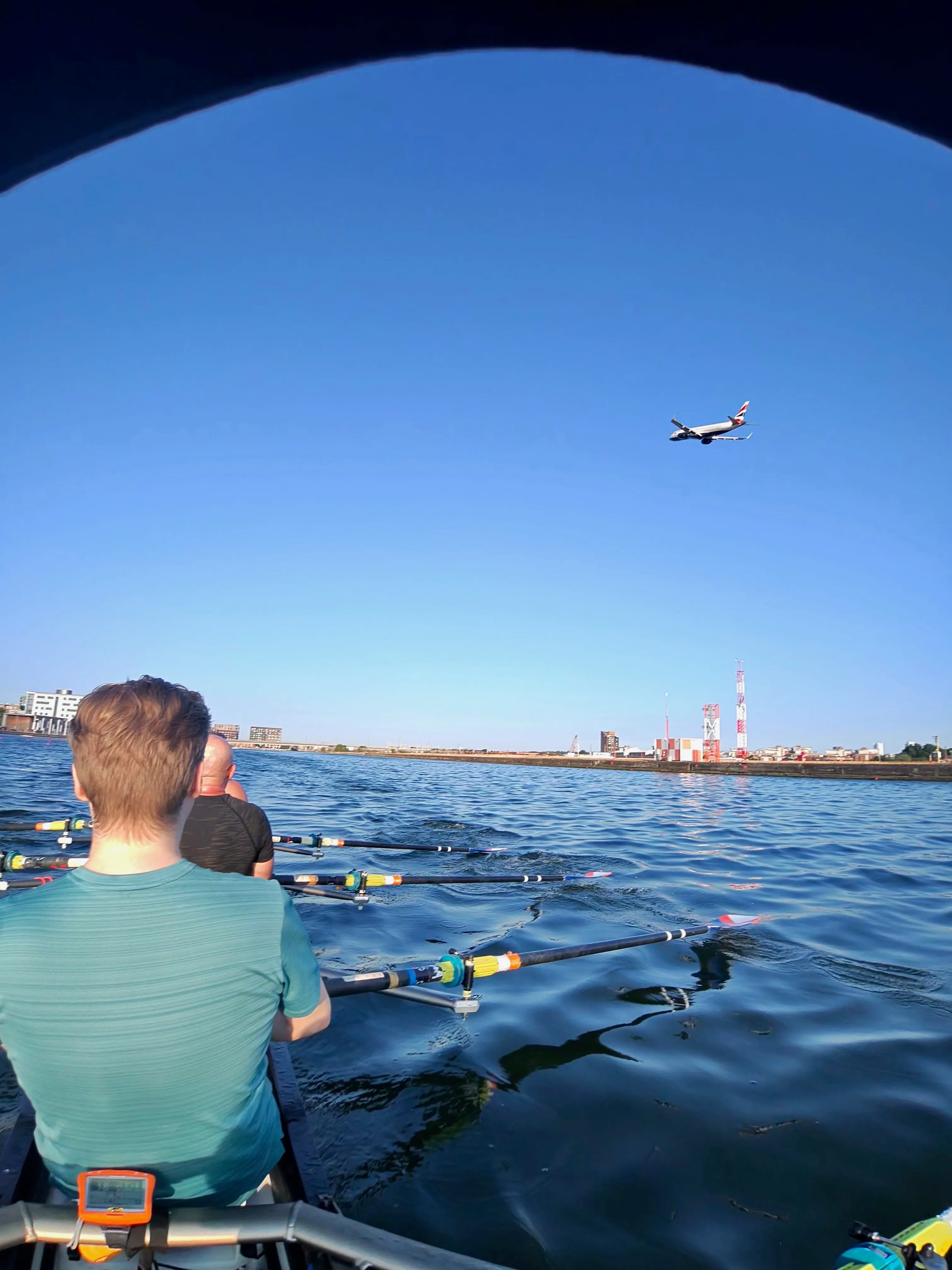
ActiveTools ActiveSpeed in use on a London Otters boat.
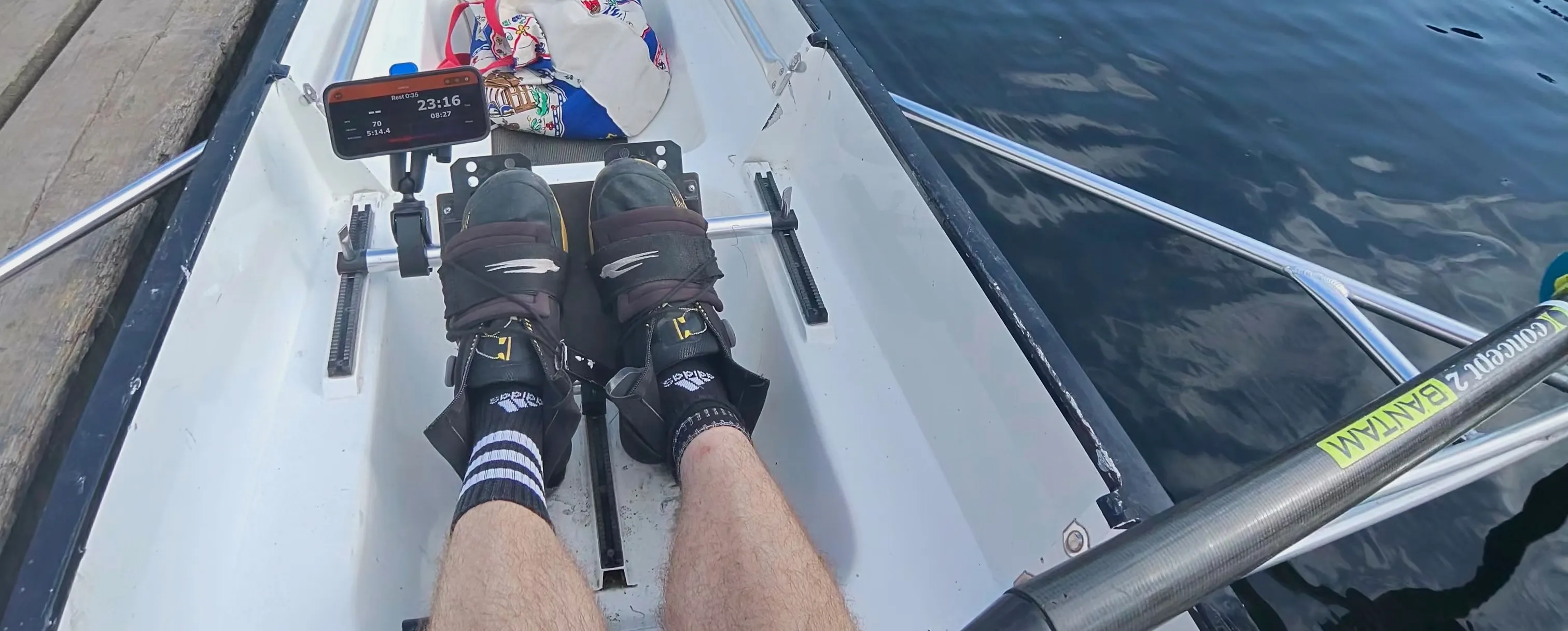
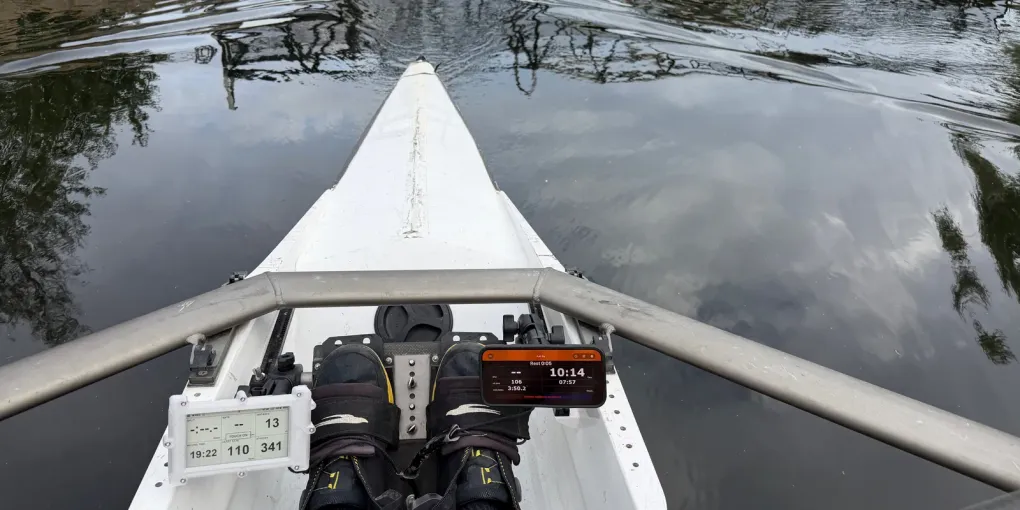
An iPhone 14 Pro on a RAM Mount running CrewNerd.
Both the NK SpeedCoach and ActiveTools units are old world devices in that they have clunky LCD-based monochrome displays and limited telemetry collection with questionable fidelity. I don’t find the LCD displays themselves particularly offensive, they’re kind of cool in a retro way, but they are old. Some analysis of the ActiveTools unit (which pulls in firmware updates from an unauthenticated server) indicated that it uses an 8051 chip, which is very old. The ActiveTools unit, despite it’s age, does communicate over Bluetooth with an app and does support syncing to Strava (good) - but in general it does not feel like a refined product (you can see glue on the seems, the rubber bumper has that cheap-plastic-offgassing smell, etc). My biggest complaint with the AT device is that the mount is terrible quality and very weak. It’s very easy to dislodge the device when it’s attached to the boat.
A lot of the AT’s bits and bobs are 3D printed… which is kinda cool, but it also feels unfinished, a prototype.
I haven’t owned an NK device as they’re really expensive and seemingly much more backwards in terms of technology compared to the AT.
My conclusion is that there just isn’t much of a market in the rowing world for a better computer and so there’s no real reason or money in it to justify designing something new, which means things remain shitty and expensive and so the cycle continues.
Building a better rowing computer
Building a hardware product like a rowing computer is hard work, really hard work. Such a product covers multiple disciplines: the maths to detect stroke rate and related filtering, the question of the software environment (language, processor, interfacing with hardware), the hardware question (power budget, cost, efficiency, physical size, water ingress, matching of “client” requirements eg. daylight-legible display), the related hardware components (the enclosure, user interface vs water ingress, vs tactile feedback), extending from the previous point: 3D industrial design.
This is a hard multi-discipline problem. Ordinarily it would take a skilled person years to build something decent in their spare time.
But of course, we are in the age of the personal project, and AI can help accelerate a lot of this.
I first had to quantify what I, as a rower, want:
- Daylight readability
- Native Strava and intervals.icu integration (all existing bike computers do this)
- An app for visualising, syncing and configuring a device (Wahoo style, but also Garmin and Hammerhead Karoo)
- Lots of data - what can we get from a GPS and IMU?
- Expandability into oar IMU data logging and Oarlock power metering
- A boat mount that is rock-solid (existing computers on the market use really flimsy mounts)
- Just cool technology, it should excite me, as an engineer.
The display was the big one, and it came down to two technologies: Memory-in-Pixel and e-ink.
-
E-ink is cool because it’s low power when not updating.
-
It is also highly readable in daylight.
-
It is, however, relatively higher power if updated regularly, and
-
it is slow to update (generally max 4 Hz, but it usually flickers).
Above: A GPS information page on an e-ink prototype device.
MiP is
-
fast to update (60 Hz)
-
very readable in sunlight, but not as readable as e-ink
-
extremely low power, especially for fast updates
-
but it’s only available in good contrast options in small form factors
-
and it’s kinda not cool because it doesn’t look much different from everything else on the market.
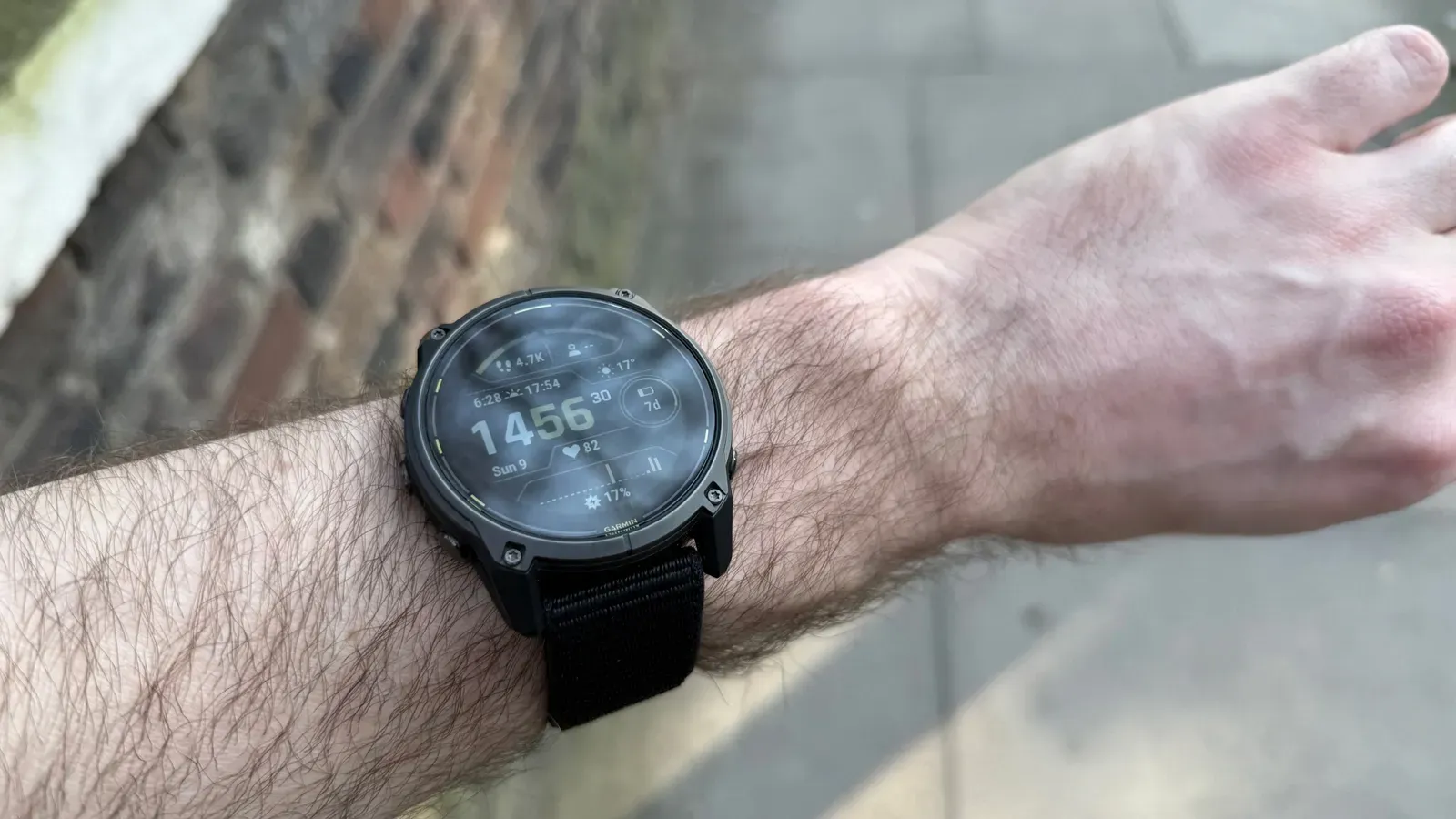
Above, the Garmin Enduro 3 GPS Watch uses a rare colour MIP display.
Honourable mention: Colour Transflective LCD.
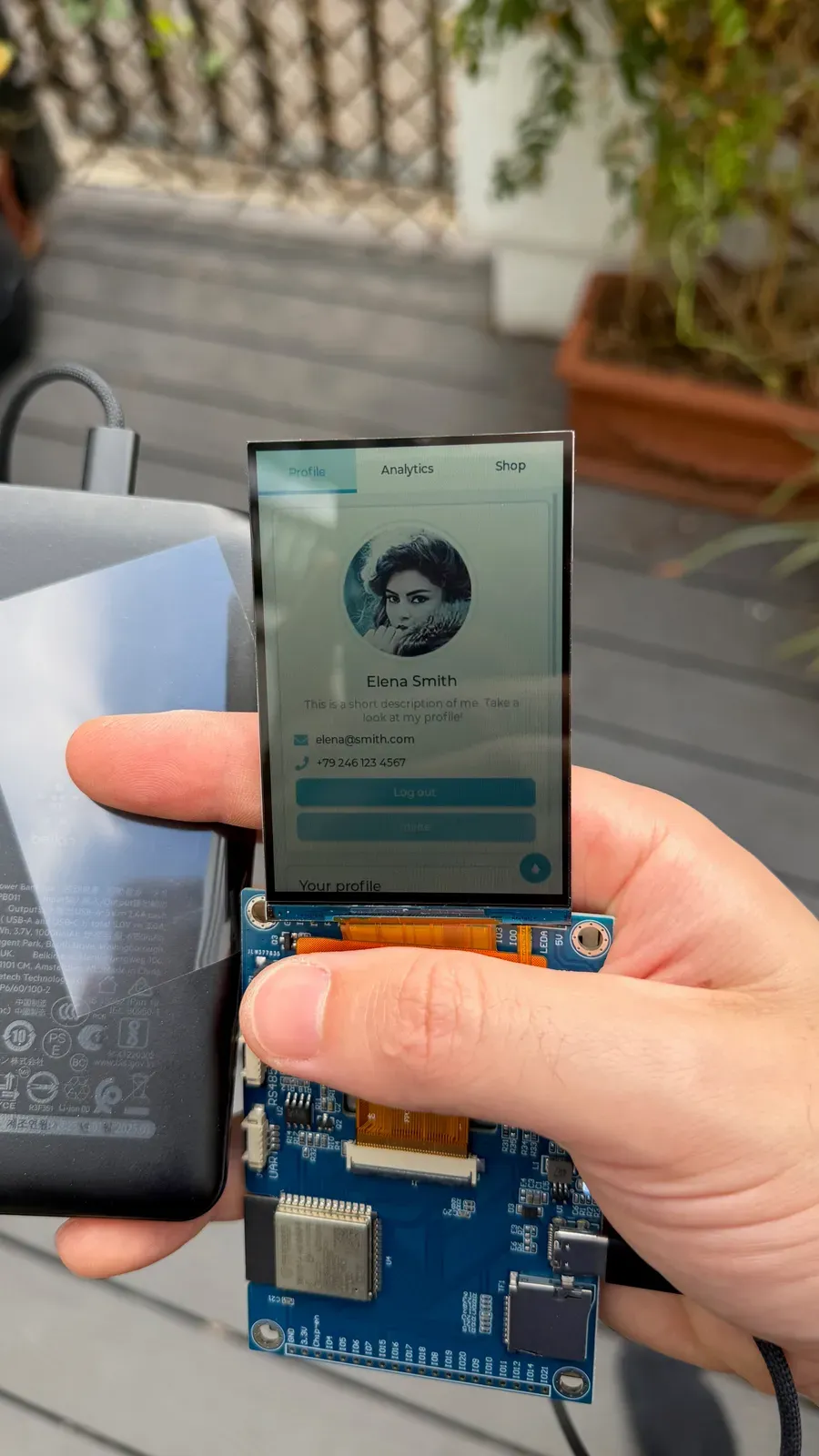
Above, a colour transflective LCD display showing a demo screen. It reflects about 12% of incident light… which is okay. It’s somewhat similar to MIP, but higher power usage. The colour is a cool product differentiator, but this isn’t highly readable.
To be continued…